Steve Young
OutsidestuffneverdidaffectmeverymuchbecauseI’mbasicallydrivenfromwithin.Idon’tliketocompeteagainstothers.Forme,it’saboutself-improvementandbeingbetterthanIwasthedaybefore.


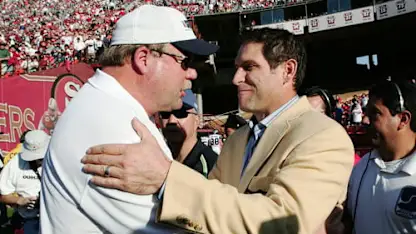
Quarterback Steve Young entered the National Football League through the 1984 Supplemental Draft. After spending two seasons in the short-lived United States Football League, the consensus All-American from Brigham Young University was selected by the Tampa Bay Buccaneers with the No. 1 overall pick in a supplemental draft that included both USFL and Canadian Football League players.
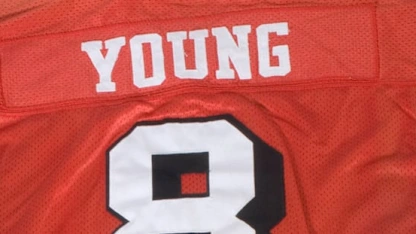
After a rough start in Tampa Bay, Young was traded to the San Francisco 49ers in 1987. In relief of Joe Montana, he saw limited action that season but made the most of those opportunities. He finished the year with 10 touchdown passes and zero interceptions, producing a passer rating of 120.8 – a mark that would have led the league had he thrown enough passes to qualify.
When he stepped into full-time duty in 1991, Young led the league in passer rating for the first of six seasons (1991-92, 1994-97), tying Sammy Baugh for the most passing crowns in NFL history.
In 1994, Young reached statistical heights never before seen at the position. He led the NFL in pass completion-percentage (70.3%), yards per passing attempt (8.6), and touchdown passes (35), while setting a single-season record for passer rating at 112.8. After defeating the rival Dallas Cowboys 38-28 in the NFC Championship Game, Young’s record six touchdown passes propelled the 49ers to a 49-26 victory over the San Diego Chargers in Super Bowl XXIX, earning him Super Bowl MVP honors.
Including the postseason, Young finished his career with a 99-39 record as a starter in San Francisco. A seven-time Pro Bowler (1992-98), three-time first-team All-Pro (1992-94) and two-time league MVP (1992, 1994), he retired as the highest-rated passer in NFL history with a mark of 96.8. He led the NFL in pass completion-percentage five times (1992, 1994-97), yards per passing attempt five times (1991-94, 1997), and touchdown passes four times (1992-94, 1998).
In addition to his elite passing credentials, Young was a dynamic running threat, finishing his career with 4,239 rushing yards and 43 rushing touchdowns, both the second-most by a quarterback in pro football history at the time of his retirement.
His career stands as a testament to perseverance, adaptability and excellence at the game’s highest level. From overcoming early struggles to redefining the quarterback position with a rare blend of precision passing and athleticism, he emerged not only as one of the most efficient passers in NFL history but also as one of its most dynamic and complete dual-threats the league had seen.