Alert banner

Bobby Layne
Bobbyneverlostagame.Somedays,timejustranoutonhim.

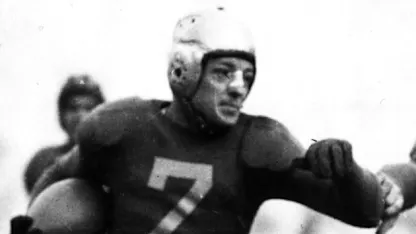
By the end of his 15-year pro football career, the legend of Bobby Layne's off-the-field shenanigans and the tales of his leadership, competitiveness and guts on the field might have overshadowed an on-field playing resume that still stands tall among the greatest to have played the game.
When he retired after the 1962 season, Layne ranked No. 1 in NFL history for pass completions (1,814), passing yards (26,768) and touchdown passes (196). He helped lead the Detroit Lions to four conference/divisional crowns (1952-54, 1957) and three NFL championships (1952-53, 1957) — twice defeating the mighty Cleveland Browns.
The rapport he developed with head coach Raymond "Buddy" Parker helped guide the Lions to some of the most successful seasons in franchise history. In the 1953 championship game, Layne enjoyed his greatest and most famous afternoon. Facing a 16-10 deficit with 4:10 left in the fourth quarter, Layne coolly engineered an 80-yard touchdown drive, capped off by Doak Walker’s extra-point kick to win the game, 17-16. Walker once said admiringly of his friend and teammate: "Bobby never lost a game. Some days, time just ran out on him."
In 1957, after Parker left the Lions to coach the Pittsburgh Steelers, Layne and the Lions won the NFL title again. A year later, he was traded to Parker’s Steelers to close out the final act of his career. During his four years in black and yellow, Layne guided to Steelers to an impressive 27-19-2 record. He was named All-Pro in 1959 and retired as the Steelers’ all-time leader in passing yards (9,030) and touchdown passes (66).
Be it his statistical accomplishments, his victories, his clutch performances or the championships he delivered to Detroit, Bobby Layne’s impact on pro football was undeniable.
Known for his unmatched toughness, gritty leadership and fearless attitude under pressure, Layne wasn’t only a great quarterback, he also was the embodiment of competitive fire. His legacy lives on as one of the toughest, most determined leaders to take a snap from center, and his name remains etched in the history of the game as a symbol of resilience, passion and winning at all costs.