Moments in NFL history: No. 4 leaps to Green Bay

In the history of professional football, several teams have obtained future All-Pros, even Hall of Famers, via trades for what later were realized as absurdly low prices.
Few trades, however, altered the trajectory of a team as profoundly as the one that occurred on this date – Feb. 9 – when quarterback BRETT FAVRE joined the Green Bay Packers in 1992.
The Atlanta Falcons selected “The Gunslinger” in Round 2 of the 1991 NFL Draft to serve as a backup to Chris Miller. In his rookie season, Favre attempted only four passes, completing none and throwing two interceptions.
After the season, RON WOLF, general manager of the Green Bay Packers, took a leap of faith with Favre – a player he liked while working for the New York Jets. Wolf sent a 1992 NFL Draft pick (17th overall) to the Falcons to add Favre to the Packers’ roster.
“I thought he was the best player in the 1991 NFL Draft,” Wolf told the Hall of Fame recently. “He had everything you would want in a quarterback. When I had the opportunity to get him, I wasn’t going to pass that up.”
Wolf aced the deal.
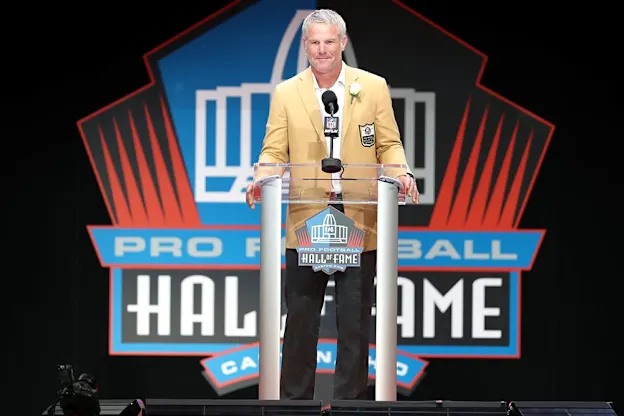
It took Favre a few games, but he started 13 of the 15 games in the 1992 season and led the Packers to a playoff berth – their first in 11 years. He would hold the starting quarterback position with the Packers for 16 seasons – never missing a game. He threw for more than 61,000 yards and led the franchise to multiple playoff appearances, winning Super Bowl XXXI over the New England Patriots.
Looking back, the Green Bay Packers took a shot on an unproven kid from Southern Mississippi who went on to become a Pro Football Hall of Famer. Wolf summed up the move he made to bring Favre to Green Bay in one word: “Unbelievable.”
Other notable trades involving future Hall of Famers
- 1976: Oilers send STEVE LARGENT to the Seahawks for a 1977 8th-round pick
- 1987: Buccaneers send STEVE YOUNG to the San Francisco 49ers for 1987 2nd- and 4th- round picks
- 1996: Rams send JEROME BETTIS and a 1996 3rd-round pick to the Steelers for a 1996 2nd-round pick and a 1997 4th-round pick
- 1999: Colts send MARSHALL FAULK to the St. Louis Rams for 1999 2nd- and 5th-round picks
- 2007: Raiders send RANDY MOSS to the New England Patriots for a 2007 4th-round pick